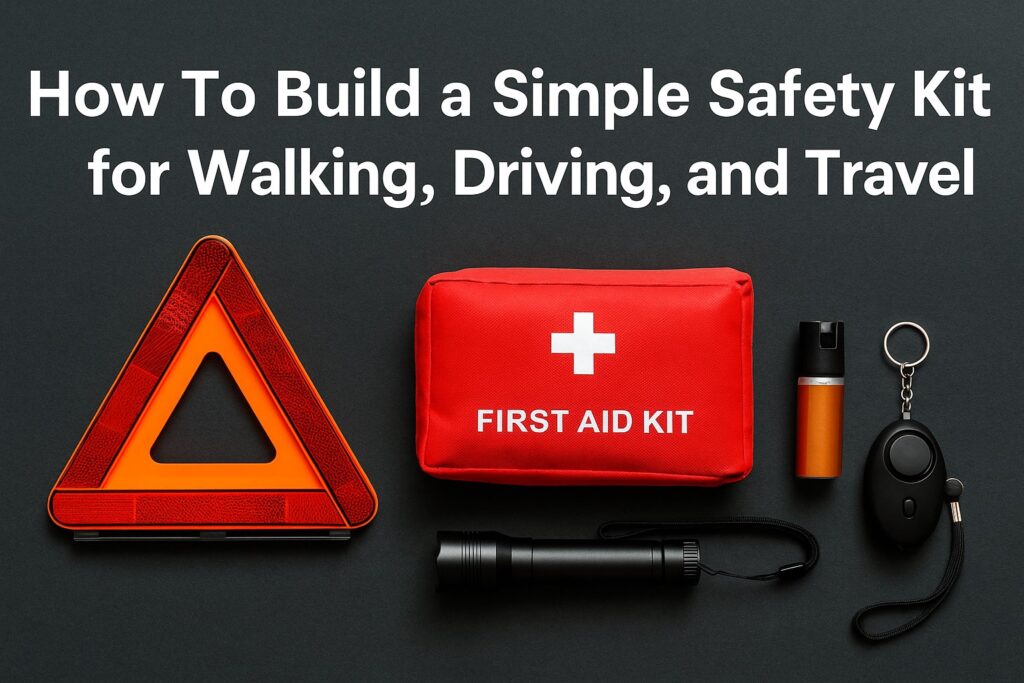
Most people think safety means buying a bunch of gear and tossing it in a drawer. Real protection is simpler than that. A small safety kit that you can actually reach while walking, driving, or traveling will do more for you than a trunk full of gadgets you never touch.
In this guide we will build a simple kit that fits your life. Nothing tactical or complicated. Just real self-defense tools that you can carry, find fast, and use under stress.
Why A Simple Safety Kit Matters
Bad situations rarely give you a warning. You are walking across a dark parking lot. You miss your freeway exit and end up in a rough area. A hotel door does not feel as secure as it should. In moments like these you do not have time to dig, search, or second guess yourself.
A simple kit does three important things for you.
First, it keeps your tools in the same place every time so your hands know where to go. Second, it cuts out bulky items that you will never carry in real life. Third, it gives you options that fit the law and your comfort level, from loud alarms to pepper spray and bright flashlights.
The goal is not to carry everything. The goal is to carry the right few things and know exactly how to use them.
Step One. Choose A Core Tool For Everyday Walking
Think about what you do most often. For many people that is walking from the house to the car, the car to work, or quick errands at night. Your first priority is a tool that lives in your hand or on your keys during those short trips.
Keychain Pepper Spray For Fast Access
Pepper spray belongs in the front row of almost every safety kit. A small keychain unit is easy to carry and gives you a clear way to create distance and escape. Look for a design that rides on your key ring and pops free without a fight. You do not want to twist, unsnap, and untangle straps while someone is walking toward you.
If you want to see examples of strong, legal sprays in different sizes you can browse a dedicated pepper spray section on my main store here. Best Self Defense Pepper Spray.
Personal Alarms For Noise And Attention
Not every situation calls for spray. Sometimes you just need loud sound that says something is wrong right now. A pull pin or single button personal alarm is perfect for people who do not want to carry anything that sprays or shocks.
Clip the alarm to a purse strap, belt loop, or backpack so you can grab and pull in one motion. Simple tools like this are also a good option for teens, college students, or places where weapon rules are strict. You can see different alarm styles here. Best Personal Security Alarms.
Step Two. Add Safety Tools For Your Vehicle
Your car is another place where a small safety kit can make a huge difference. You may never need it, but when something goes wrong on the road you will be glad you took a few minutes to prepare.
Bright Flashlight Or Stun Flashlight
Every vehicle should have a strong light within reach of the driver. You can use it to check around your car before getting in, signal for help, or quickly light up a dark parking lot. Some people prefer a dedicated tactical flashlight. Others like a combo unit that includes a bright light plus a built in stun feature for extra stopping power.
Whichever style you choose, make sure you know where it lives. A light that always rides in the driver side door, center console, or a small bag behind the seat is far better than one that drops under the seat and disappears for a year.
Seat Belt Cutter And Glass Breaker Tool
These tools are small, cheap, and powerful in the right moment. A combo safety tool that cuts a jammed seat belt and pops a side window can help you escape after a crash, flood, or fire. Mount it where the driver can reach it without unbuckling. Do not bury it in the glove box under paper clutter.
If you want one tool that covers almost everything on your driving checklist, the 8-in-1 Car Safety Tool is a smart pick. It charges your phone, cuts a seatbelt, breaks glass, and gives you light when you need it most.
Spare Power And Basic Comfort Items
You do not need a full survival kit to be safer on the road. A small power bank for your phone, a charging cable, a bottle of water, and a light blanket can turn a stressful breakdown into a manageable delay. Keep these items in a small tote or pouch so they stay organized instead of rolling around the trunk.
Step Three. Pack Smart For Travel And Hotels
Travel can be fun, but it also puts you in new places where you do not know the area or the people. A travel version of your safety kit should take up very little space and follow both airline rules and local laws.
Tools That Work Well In Hotels
One of the simplest upgrades you can make is a small door stop alarm or travel door lock. Devices like these add resistance if someone tries to push in your hotel room door and they create loud noise that buys you reaction time.
Add your everyday flashlight and a compact personal alarm and you already have a solid hotel safety kit that weighs almost nothing in your luggage.
What To Do About Pepper Spray And Flights
Rules change over time, but in general pepper spray belongs in checked luggage only, never in carry on bags. Always review current airline and TSA rules before you fly. If you are not sure, it may be easier to buy spray at your destination and leave it behind when you return home.
For long road trips where you are not flying, a standard keychain pepper spray can ride on your keys just like it does at home. The same simple rule applies. Keep it where you can reach it without digging.
How To Organize Your Safety Kit So You Do Not Fumble
Once you have chosen your tools, the way you store them is just as important as the gear itself. The most common mistake people make is scattering everything in different pockets and bags. When something feels wrong they freeze, look down, and lose precious seconds.
Use One Small Pouch For Backup Items
Think of your kit in two layers. The first layer is what lives on your body or in your hand. That might be your keychain spray, alarm, or stun device. The second layer is a small pouch that stays in your bag or vehicle with back up items like a spare flashlight, extra batteries, and a copy of important documents.
Choose a pouch with a bright color or simple label so you can find it fast. The goal is to open your bag and see one clear item instead of a pile of loose tools.
Give Every Tool A Parking Spot
Decide where each item lives and stick with it every day. Your keychain spray always lives on your keys. Your alarm always clips to the same strap. Your car flashlight always rides in the same door pocket. After a few weeks your hands will start to move there on their own whenever you feel uneasy.
Practice When You Are Calm
Take a few minutes at home to practice drawing and aiming your tools. You do not need to spray or fire them every time. Just go through the motions while you are relaxed. This builds muscle memory so that when your heart rate jumps, your body already knows what to do.
Real Life Places Your Safety Kit Helps
Here are a few everyday situations where a simple safety kit makes a real difference.
- Walking across a dark parking lot with your keys and spray already in your hand instead of buried in a bag.
- Getting a flat tire on the side of the road and using your bright light plus a phone charger instead of sitting in the dark with a dying battery.
- Checking into a hotel and adding your own door stop alarm so you sleep a little easier in a strange place.
- Heading out on a hike with bear spray and a basic survival tool instead of just hoping for the best.
None of these require a giant backpack or a military loadout. They only require a few small tools and a habit of carrying them the same way every time.
Quick FAQ About Building A Simple Safety Kit
Do I need different kits for home, car, and travel
You can start with one basic set of tools and then adjust it for each place. For example you might use the same keychain spray and alarm everywhere, then add a flashlight and seat belt cutter for the car, and a door stop alarm for travel.
What if my job or school has rules about weapons
Always follow local rules and workplace or campus policies. In some places you may not be allowed to carry pepper spray or stun devices. You can still build a useful kit with loud personal alarms, strong flashlights, and simple safety habits like walking with a friend and staying in well lit areas.
How many tools do I really need
Most people do well with three main items. One tool for distance like pepper spray, one tool for noise like a personal alarm, and one light for visibility. After that you can add specialty tools only if they fit your life.
How often should I check my safety kit
A quick check once a month is enough for most people. Look at expiration dates on sprays, recharge stun devices and flashlights, and make sure everything is still in its parking spot.
Here Is What We Learned. The Bottom Line
A safety kit does not have to be big or complicated. The tools that protect you are the ones you can reach quickly and use with confidence. Start with one or two items for walking, add a few smart pieces for your vehicle and travel, and give everything a clear parking spot.
If you want ideas for simple tools that fit into a kit like this, you can browse more options on my main store here: Shop Self Defense Tools.
Build a kit that matches your real life. Keep it light. Keep it simple. Practice just enough so your hands know what to do before your brain has time to panic.
To learn more on safety, news, and tips visit our blog at this link Best Defense Tools